Glossary · Story Craft
Show, don’t tell
Let readers discover what a character feels through action, dialogue, and sensory detail.
Two ways to write the same moment
Telling: Maya was nervous.
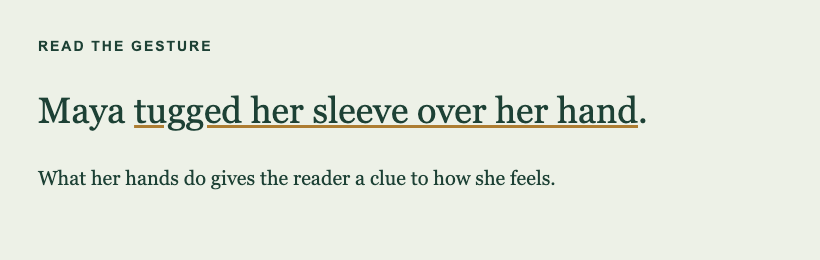
Showing: Maya tugged her sleeve over her hand and read the first line again.
In the second version, we see a gesture and hear the pause before Maya speaks. Readers can draw their own conclusion about how she feels.
Try it in your draft
Choose a sentence that names a feeling. Imagine watching the character from across the room. What would you see or hear? Write down one detail and read the sentence aloud.
Telling can help you move quickly between scenes. Save the close-up for a moment you want your reader to experience.